
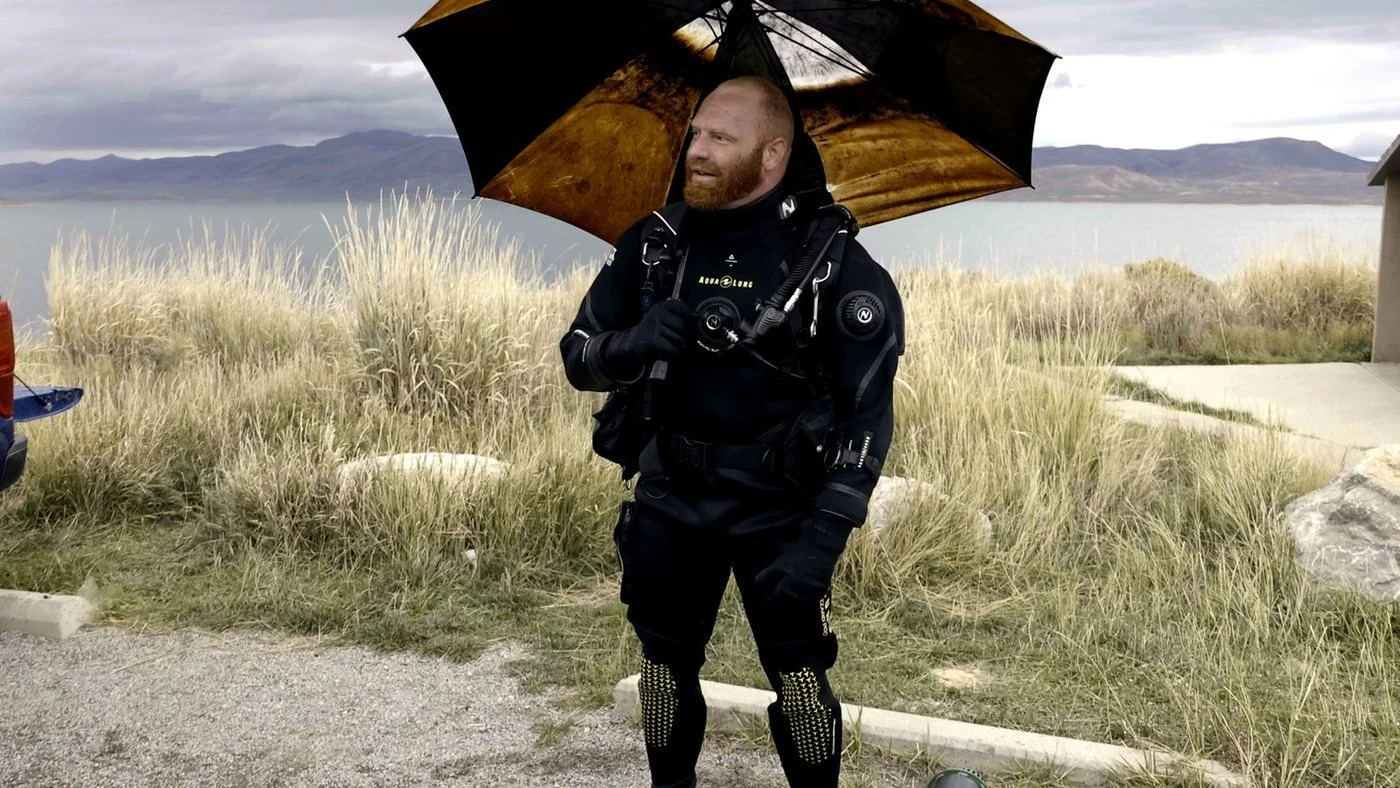
Fathom Restoration · Utah
We are diving to clean up our lakes and reservoirs.
Out of sight and out of mind doesn't work when it's affecting our ecosystem. This is our drinking water, our recreational land, and our source of food.
IRS recognized 501(c)(3)Founded by three veterans


The bottom
From the shore the water looks fine. Our divers see the bottom.
Twenty feet down, our volunteer divers find what people leave behind. Plastic. Broken glass. Fishing line. Heavy chunks of metal.
Somebody has to go get it. Today the trash comes out by hand, one dive at a time. The boats and the cars that the records say are down there come out next, once we have the equipment, the insurance and the permits to lift them.
What we did about it
Our volunteers have carried out about 93 pounds of trash in 4 dives, and the log keeps growing.
Since September the crew has gone in again and again and carried out what it found. A rusted boat ladder. Paddles. A Bluetooth speaker. Three folding chairs. An umbrella. A kite. Cans, and more fishing line than anyone wants to think about. We lay it out, estimate the weight, photograph it and write it down. We aim low and never round up. Every dive goes in the log, the newest ones land here first, and every tile opens its story.
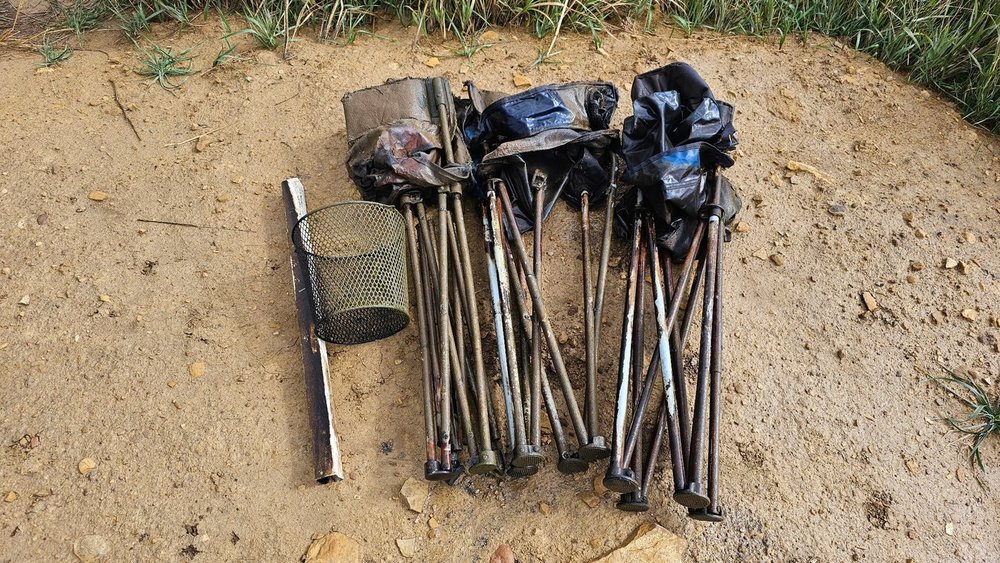
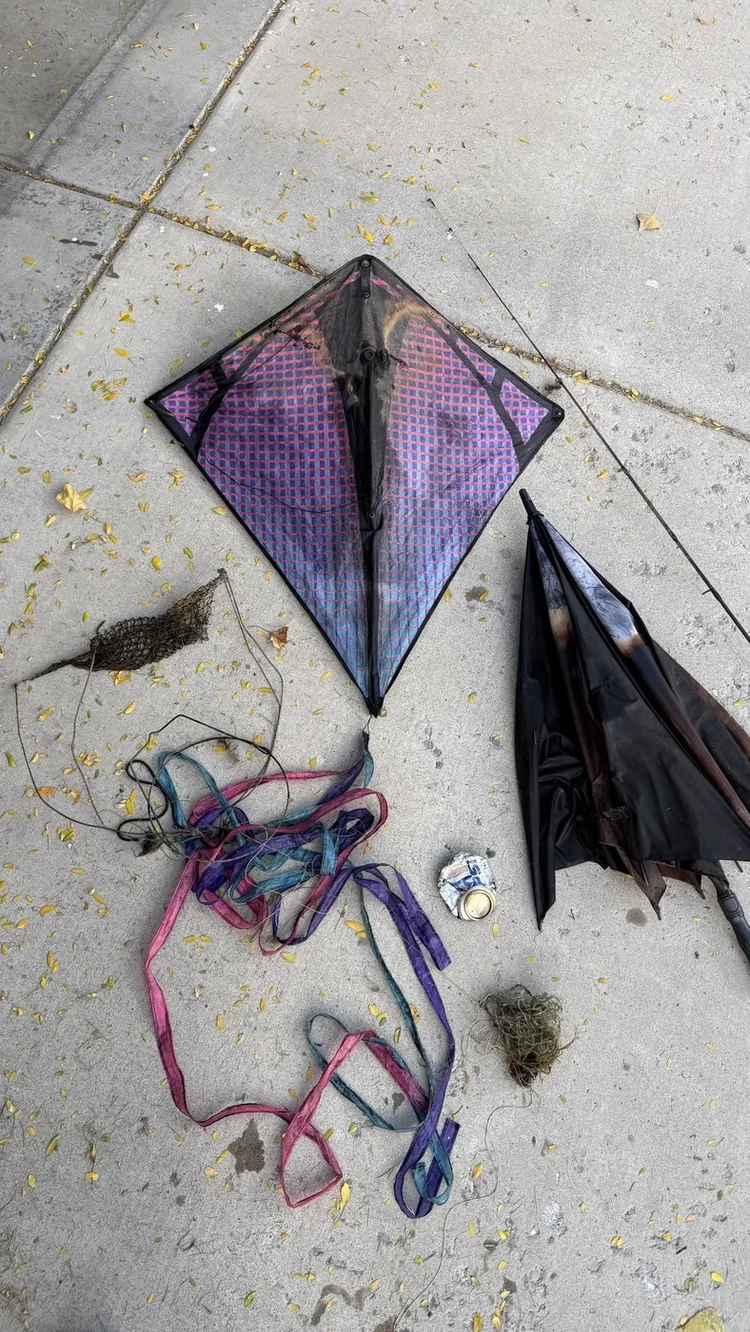
Three folding chairs, an umbrella, a kite, a fishing pole, a net, a wire basket on a pole, cans. About 35 lbs, estimated.
Read the story →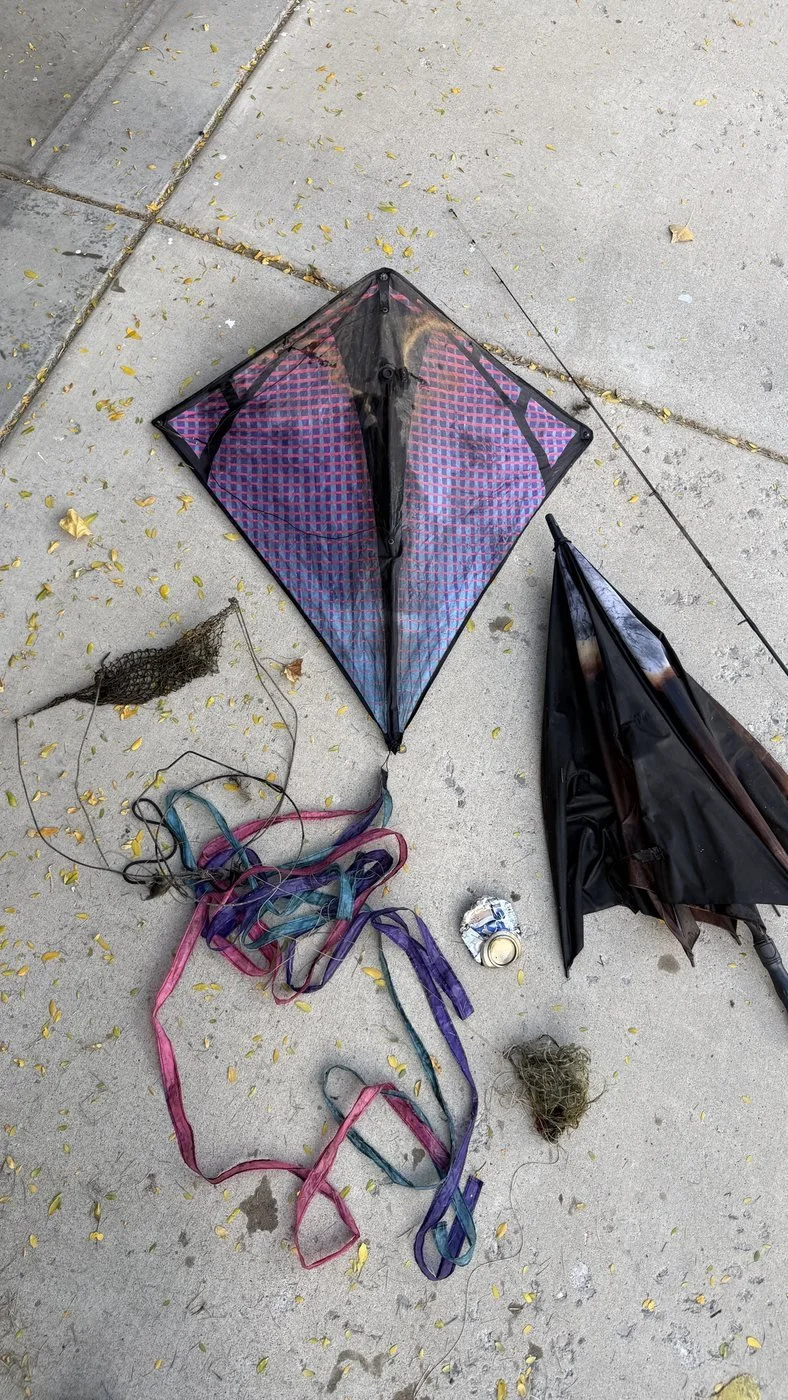
The kite came up by following its line along the bottom. The umbrella fought back. Find of the day was a Diet Pepsi.
Read the story →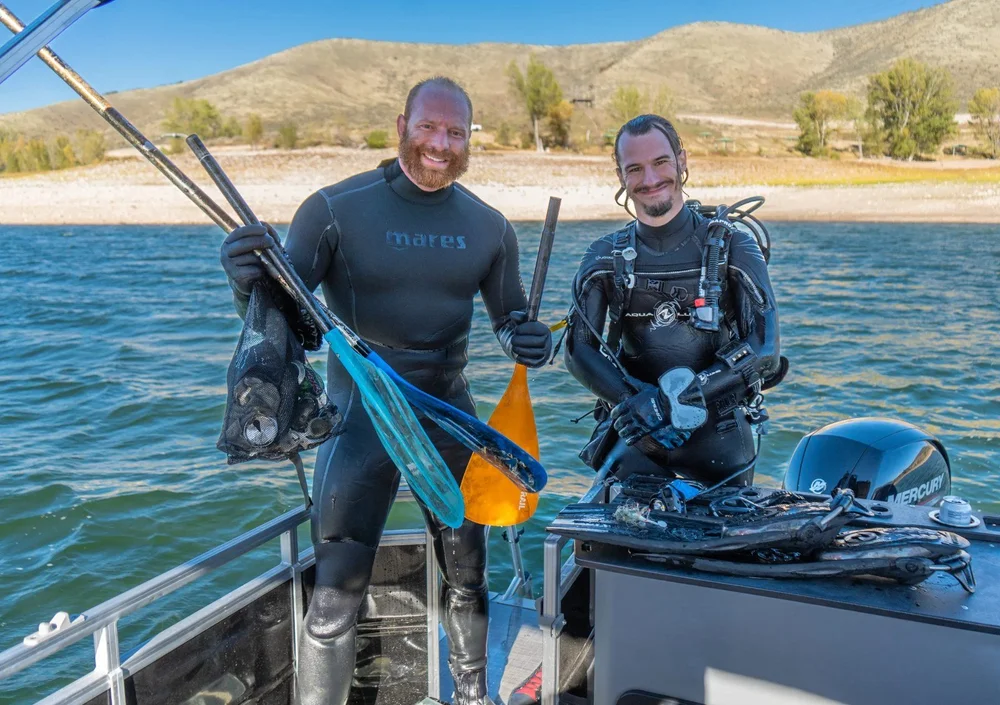
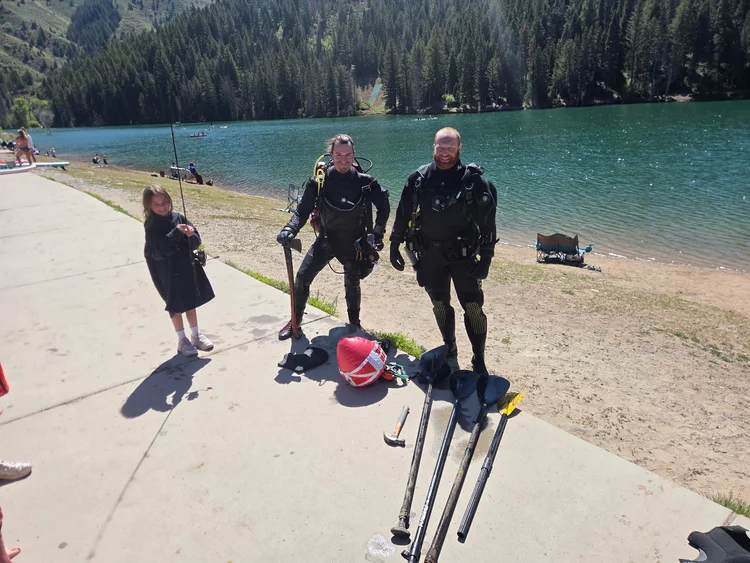
Paddles, tackle, cans, glass, chip bags, sunglasses, hats. About 18 lbs, estimated. The Park Record rode along.
Read the story →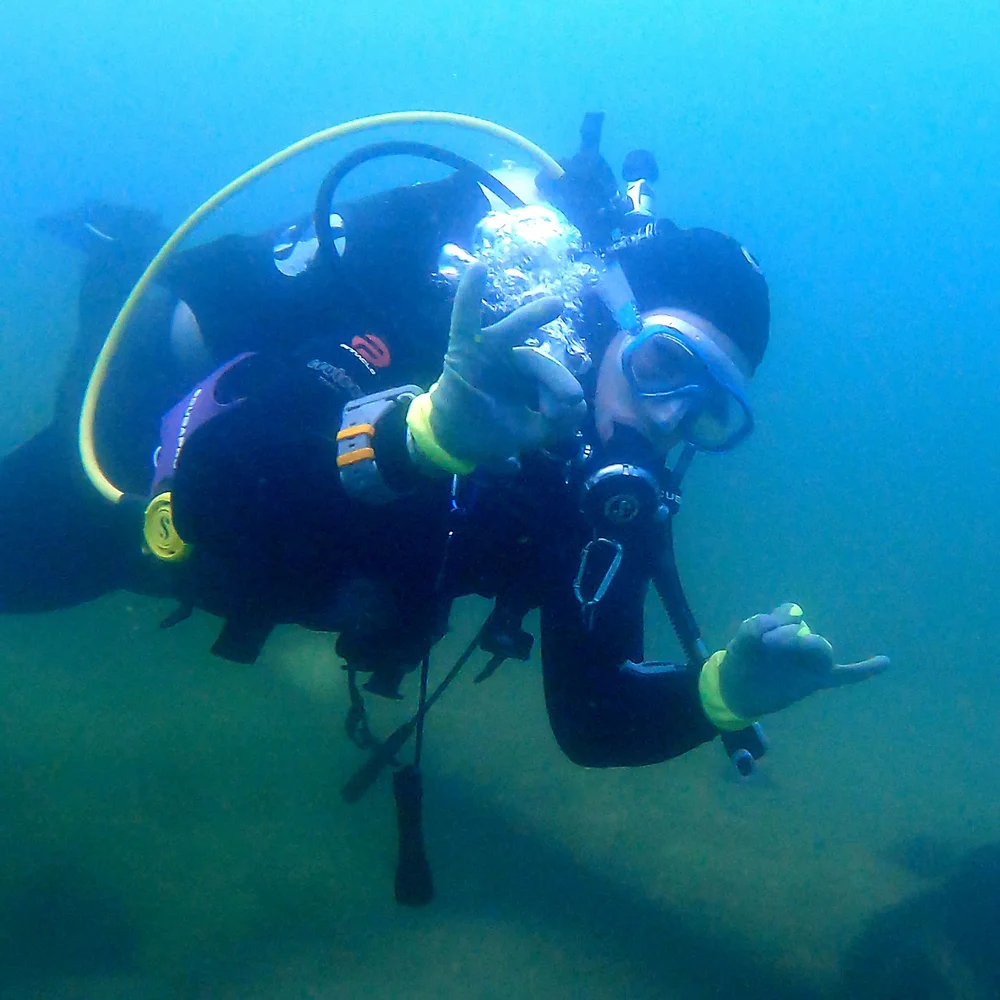
Crew dive at the state park dive park. A wrapper and some fishing line, under 1 lb.
Read the story →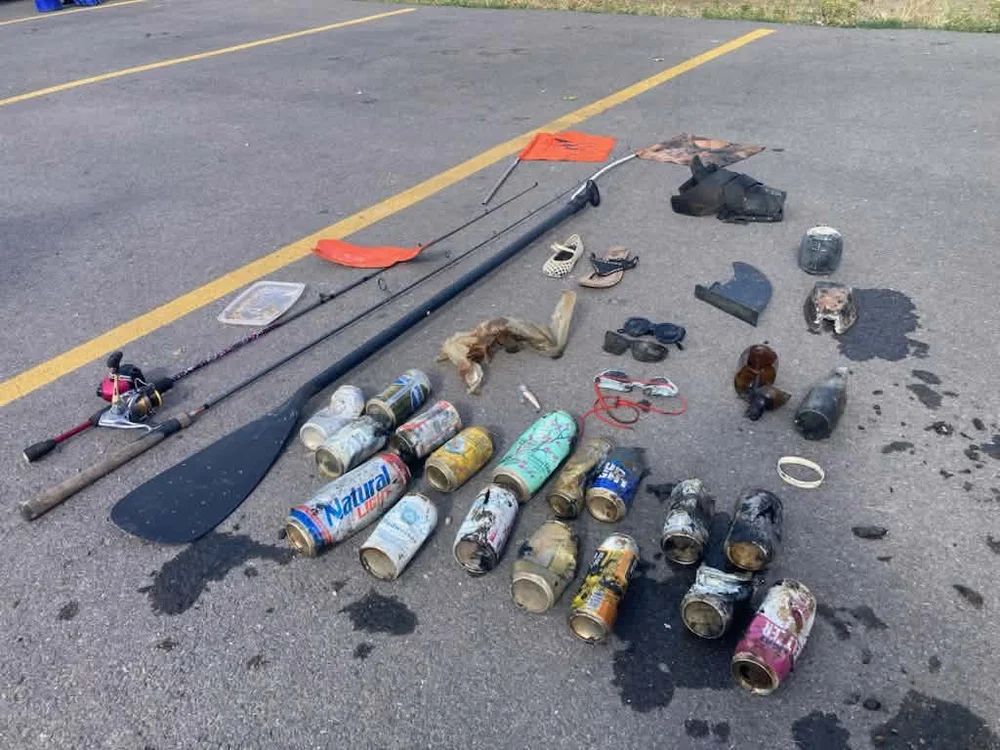
A boat ladder, a paddle, a Bluetooth speaker, fishing poles, beer cans and one golf ball. About 40 lbs, estimated.
If you are that guy drinking Natural Light, you definitely need to donate. The fish are judging you.
Read the story →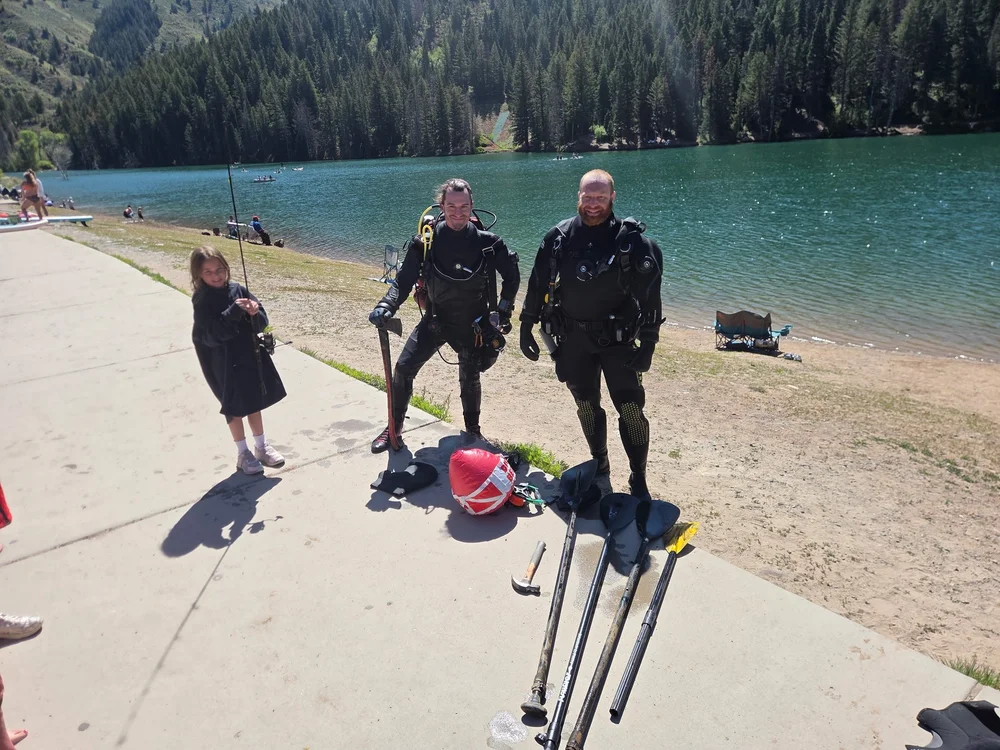
Where it started. Our first dive together, cold water and a clear bottom, before the log existed.
Read the story →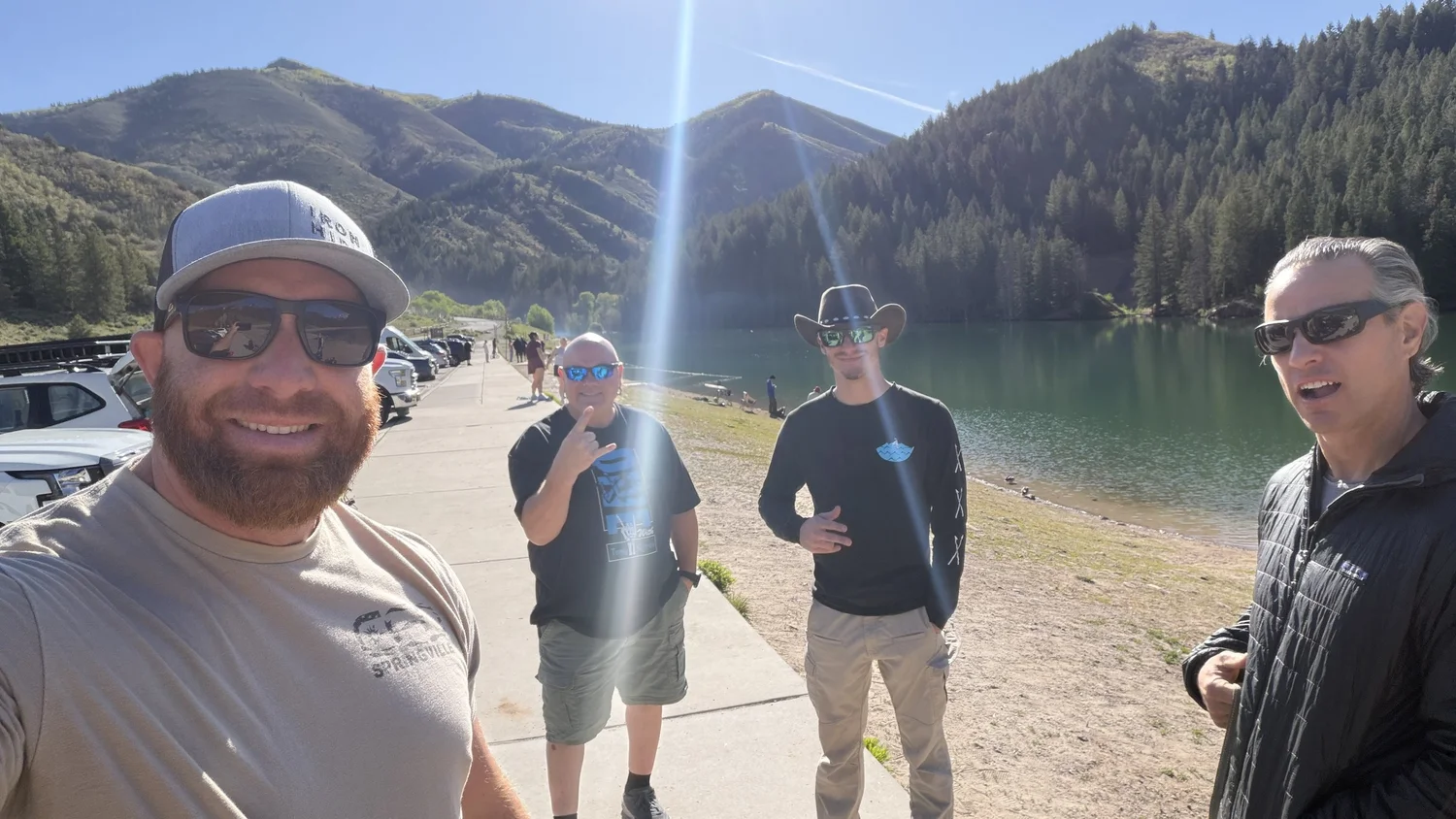
The crew
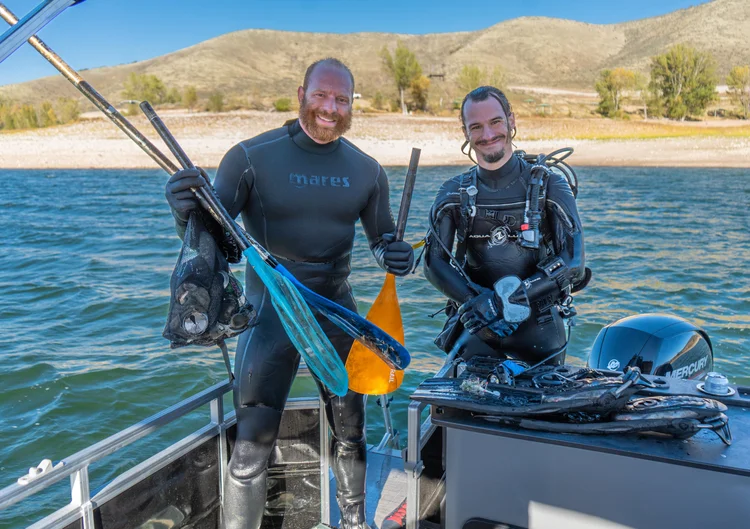
Three veterans started it. A crew of volunteers keeps it going.
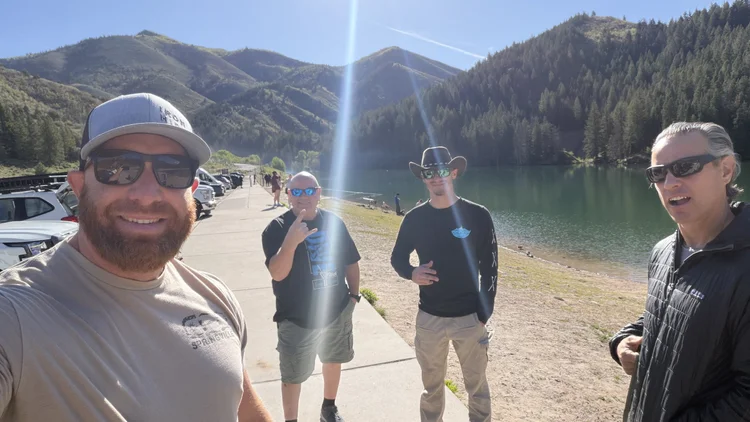
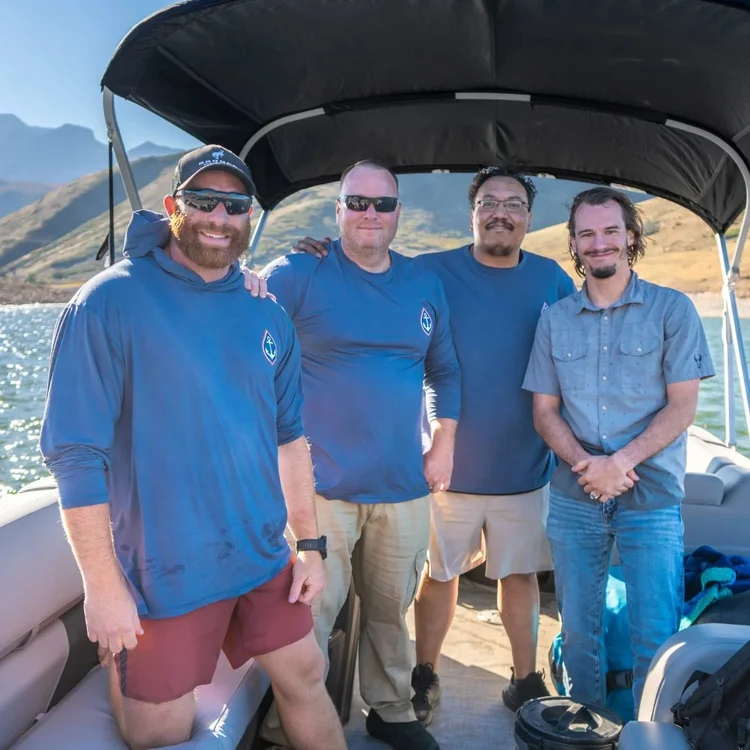
Fathom Restoration was founded by three U.S. military veterans. Around them is a crew of certified volunteer divers who go in cold on their own time, and the people on the boat and the shore who run the flag, the camera and the log. Everyone who helps keep it going is on the crew.
On September 30 The Park Record rode along at Deer Creek and told it straight. Read it. Check us on ProPublica. The log above is what this crew has done so far.
One lake, close to home
Six confirmed submerged items in Deer Creek, three of them vehicles.
Deer Creek supplies drinking water to about 479,000 people in the Salt Lake and Utah valleys.Source: Provo River Water Users Association, Deer Creek Dam and Reservoir (prwua.org), and the Bureau of Reclamation, Provo River Project (usbr.gov). U.S. 189 hugs five miles of its shore, and in 2024 a propane tanker went off that road into the lake.Source: KUTV, May 21, 2024, on the propane tanker that went off U.S. 189 into Deer Creek Reservoir (kutv.com). Our Debris Atlas counts 6 confirmed submerged items in Deer Creek, 3 of them vehicles, and estimates 8 to 25.Source: Fathom Restoration, Utah Waterways: A Submerged Debris Atlas (2026, updated August 4, 2026). Confirmed items are individually documented, each tied to a public source. Read the Atlas.
Under the Clean Water Act an oil discharge counts as harmful the moment it causes a film or sheen.Source: Clean Water Act discharge rule, 40 CFR 110.3, on the Electronic Code of Federal Regulations (ecfr.gov). In Bemidji, Minnesota, crude oil from a 1979 pipeline rupture is still measured in the groundwater 46 years later.Source: U.S. Geological Survey, National Crude Oil Spill Fate and Natural Attenuation Research Site near Bemidji, Minnesota, a pipeline rupture in 1979 still studied today (usgs.gov).
We are working to start recovering what is down there. The first recovery is targeted for the first quarter of 2027. Until then our volunteer divers keep carrying out what they can lift.
Across the state
Our Debris Atlas counts 226 confirmed submerged items across 20 Utah lakes, each tied to a public source.
56 vehicles, 103 vessels, about 15 aircraft, about 52 structures. 499 documented and estimated.
Every lake guide
Bear Lake · Causey Reservoir · Currant Creek Reservoir · Deer Creek Reservoir · East Canyon Reservoir · Echo Reservoir · Electric Lake · Fish Lake · Flaming Gorge Reservoir · Great Salt Lake · Gunlock Reservoir · Huntington North Reservoir · Hyrum Reservoir · Joes Valley Reservoir · Jordanelle Reservoir · Kens Lake · Lake Powell history · Lake Powell fishing and boating · Lake Powell water level · Lost Creek Reservoir · Mantua Reservoir · Millsite Reservoir · Minersville Reservoir · Moon Lake · Navajo Lake · Newton Reservoir · Otter Creek Reservoir · Palisade Reservoir · Panguitch Lake · Pelican Lake · Pineview Reservoir · Piute Reservoir · Porcupine Reservoir · Quail Creek Reservoir · Red Fleet Reservoir · Rockport Reservoir · Sand Hollow Reservoir · Scofield Reservoir · Starvation Reservoir · Steinaker Reservoir · Strawberry Reservoir · Tibble Fork Reservoir · Utah Lake · Willard Bay · Yuba Reservoir · All of them on the 3D lake map
About Fathom Restoration
Fathom Restoration is a Utah 501(c)(3) nonprofit founded by veterans. We run volunteer lake cleanups on Utah's lakes and reservoirs: certified volunteer divers carry trash out by hand, and every dive goes in a public log. Our Utah Waterways Submerged Debris Atlas documents the sunken vehicles, boats and debris in 20 lakes, and we are working to start recovering them once the equipment, insurance and permits are in place. About Fathom · Volunteer · Donate · Research · Lake guides · Report something on the bottom
How it comes out
This is how trash comes out of a lake today: a diver, a mesh bag, and a walk up the shoreline.
Certified volunteer divers go in, carry what they find to shore, lay it out, estimate the weight, photograph it, haul it away and post the log. Vehicles and boats are a bigger job, and a different one. We are working to start recovering them, with commercial divers, insurance and permits in place first.
Certified volunteers, on their own time, in cold water.
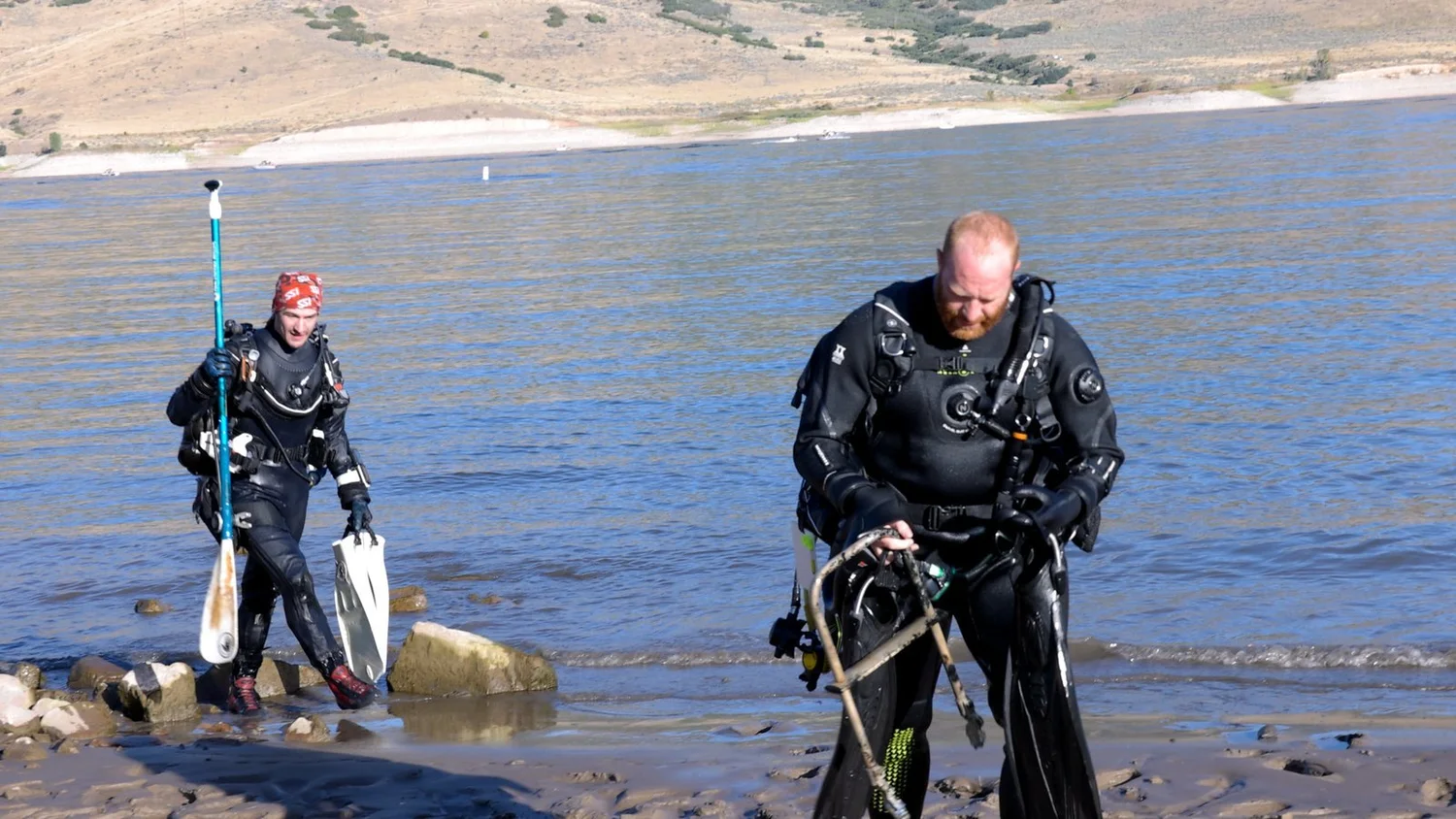
Whatever the bottom gives up, by hand, up the shoreline.
Weight estimated, photographed, written down, posted.
What it takes
Insurance is the gate, and it costs $8,000 a year.
We run volunteer lake cleanups now, and every dive goes in the log. An official cleanup event, open to anyone who wants to help, needs insurance first. That policy costs $8,000. Until it is paid, nobody legally gets in the water for one.
Sponsors and donors are how that gate opens. The companies below already stand with us.
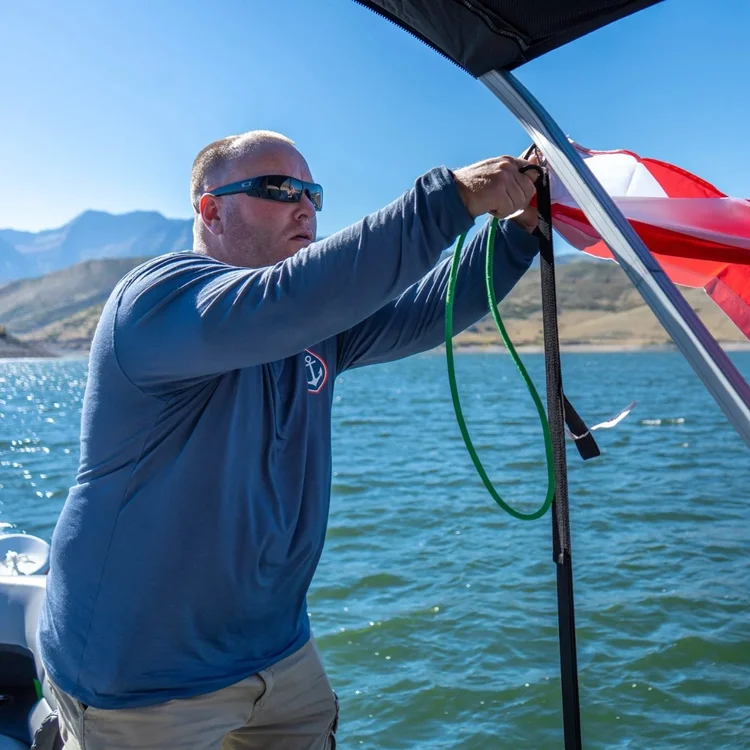
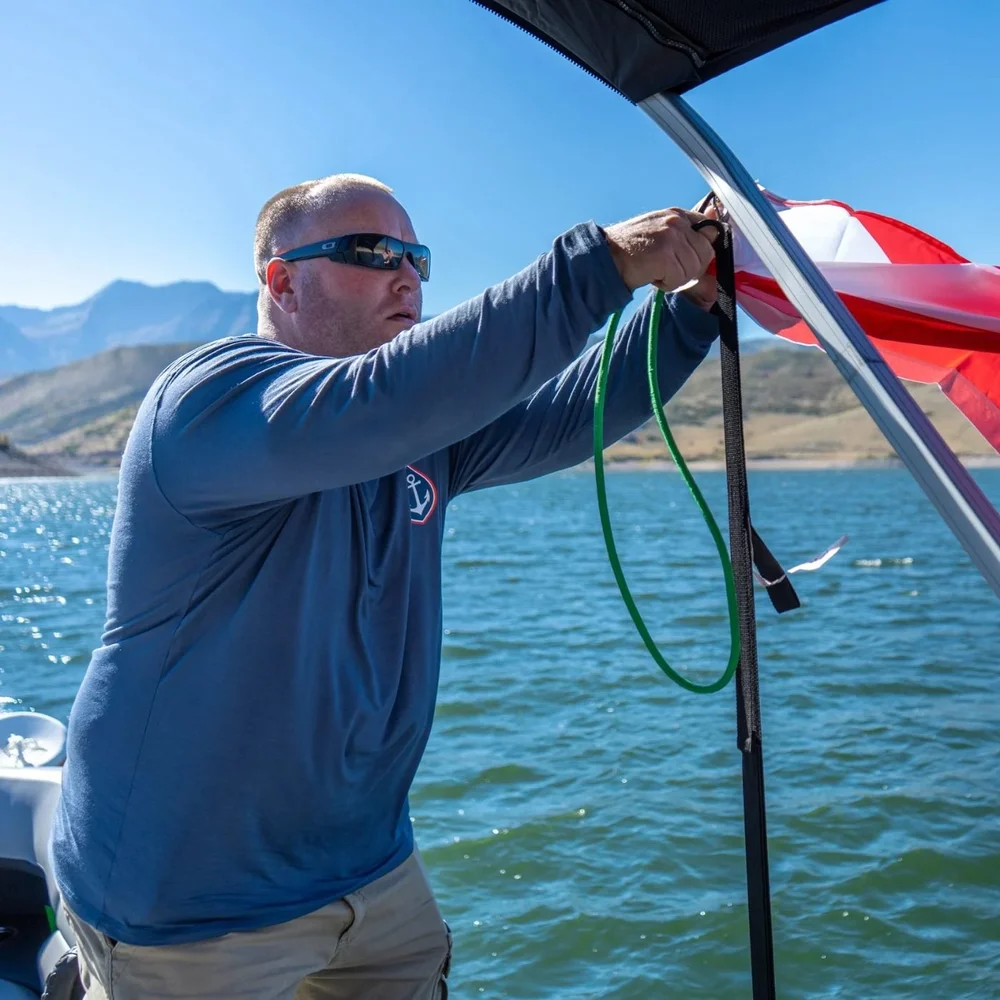 Deer Creek Reservoir, dive flag up. Photo: Jonathan Herrera, The Park Record.
Standing with usour sponsors
Join the list and show your customers you support clean water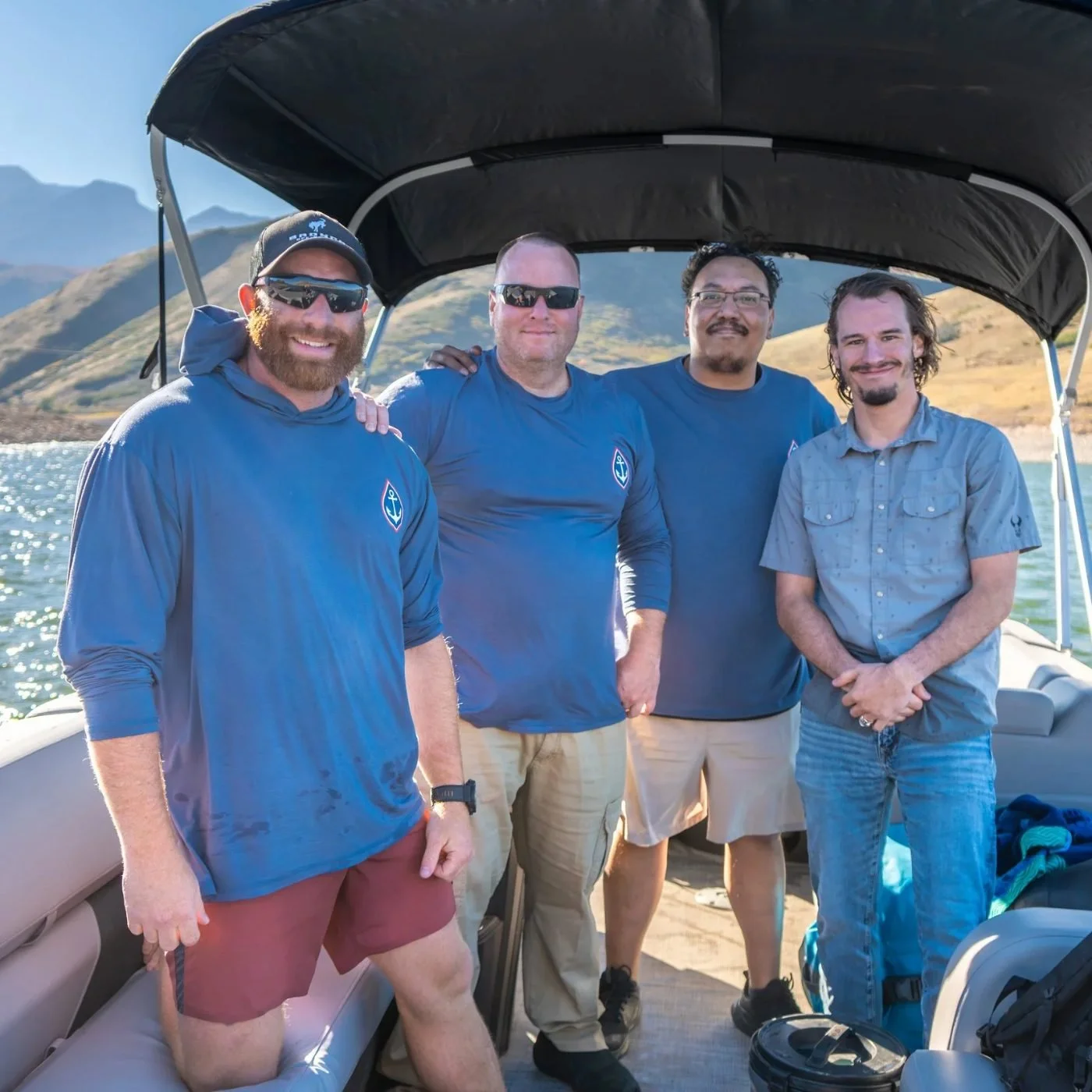 Deer Creek Reservoir. Photo: Jonathan Herrera, The Park Record.
The rest of the crew
Nobody cleans a lake alone.
This is bigger than three veterans and a few sets of dive gear. Every dive costs air fills, rented gear, a boat and a trailer, and the insurance that opens the water to official cleanups. You do not need a dive card to be on this crew. Shore crew runs the beach, staging gear, tending lines, sorting the haul and keeping the count.
Come volunteer, or fund the next dive. Either way, you are crew.
Fund the dive
Every dollar travels far with us.
Every dive is logged, photographed and posted, so you can see what came out. Give once, or give monthly to keep the air fills and the hauling paid between grants.
Gear rentals, air fills and hauling come due every time we go in. A monthly gift of any size keeps them paid between grants. Choose Monthly on the donate form.
Apple Pay, Google Pay and cards on the donate page. Fathom Restoration is an IRS recognized 501(c)(3), EIN 42-2166469. Donations are tax deductible to the fullest extent of the law.
Employer matching, donor advised funds, stock, in kind gear, legacy gifts and corporate sponsorship: see the donate page
- A boat ladder
- A paddle
- A Bluetooth speaker
- Fishing poles
- Beer cans
- One golf ball

Buy the shirt. Fund the dive.
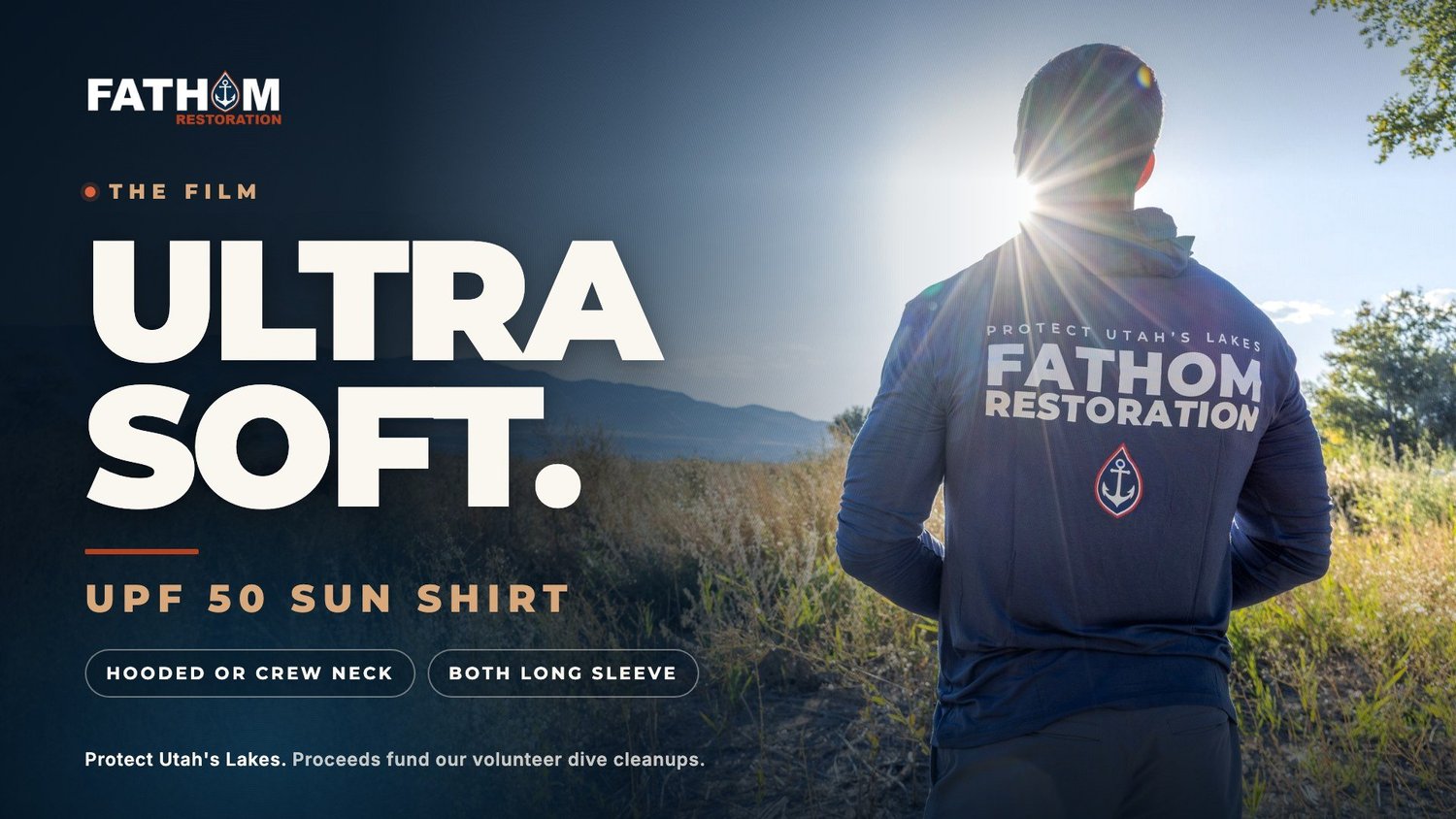
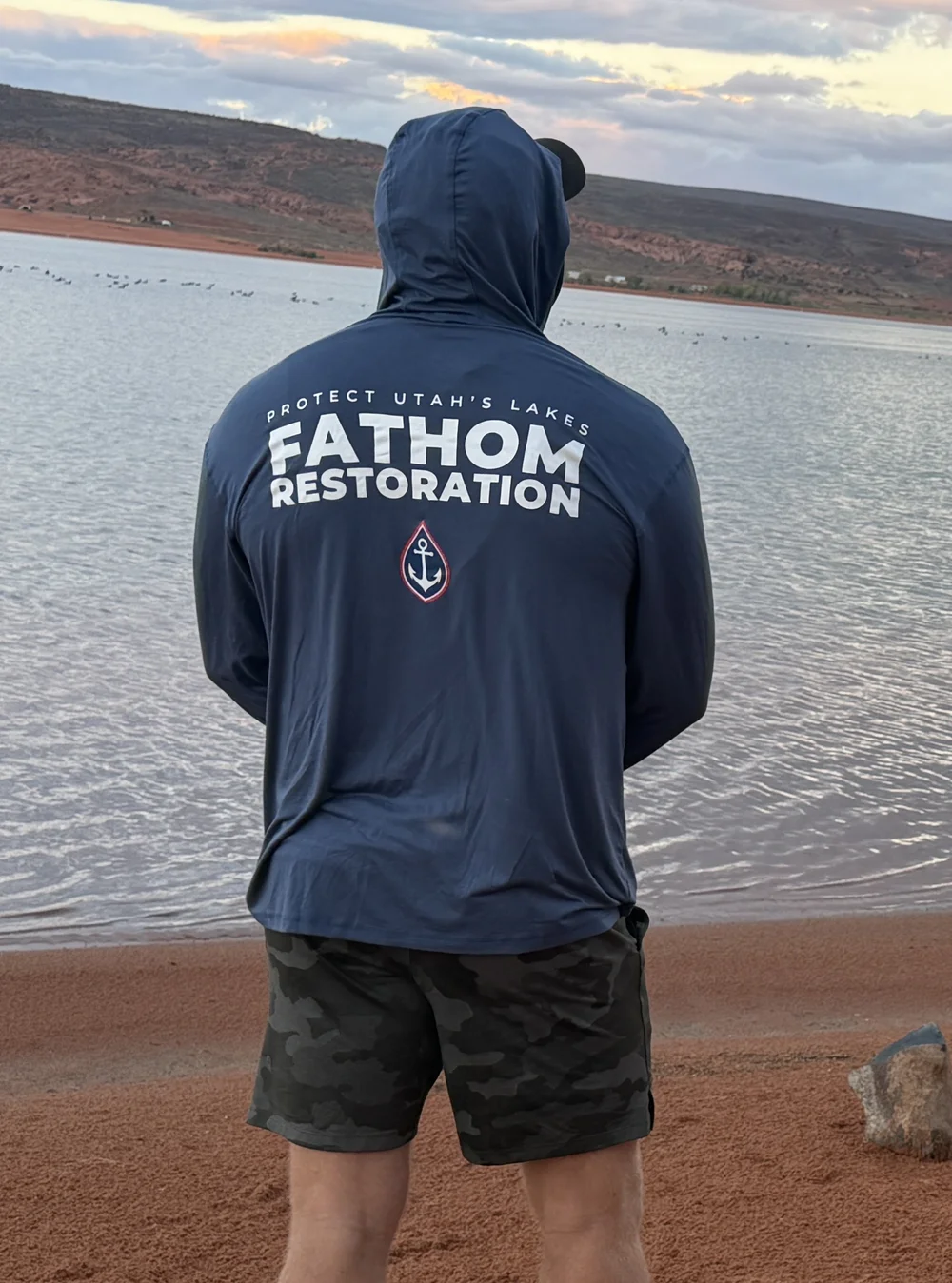
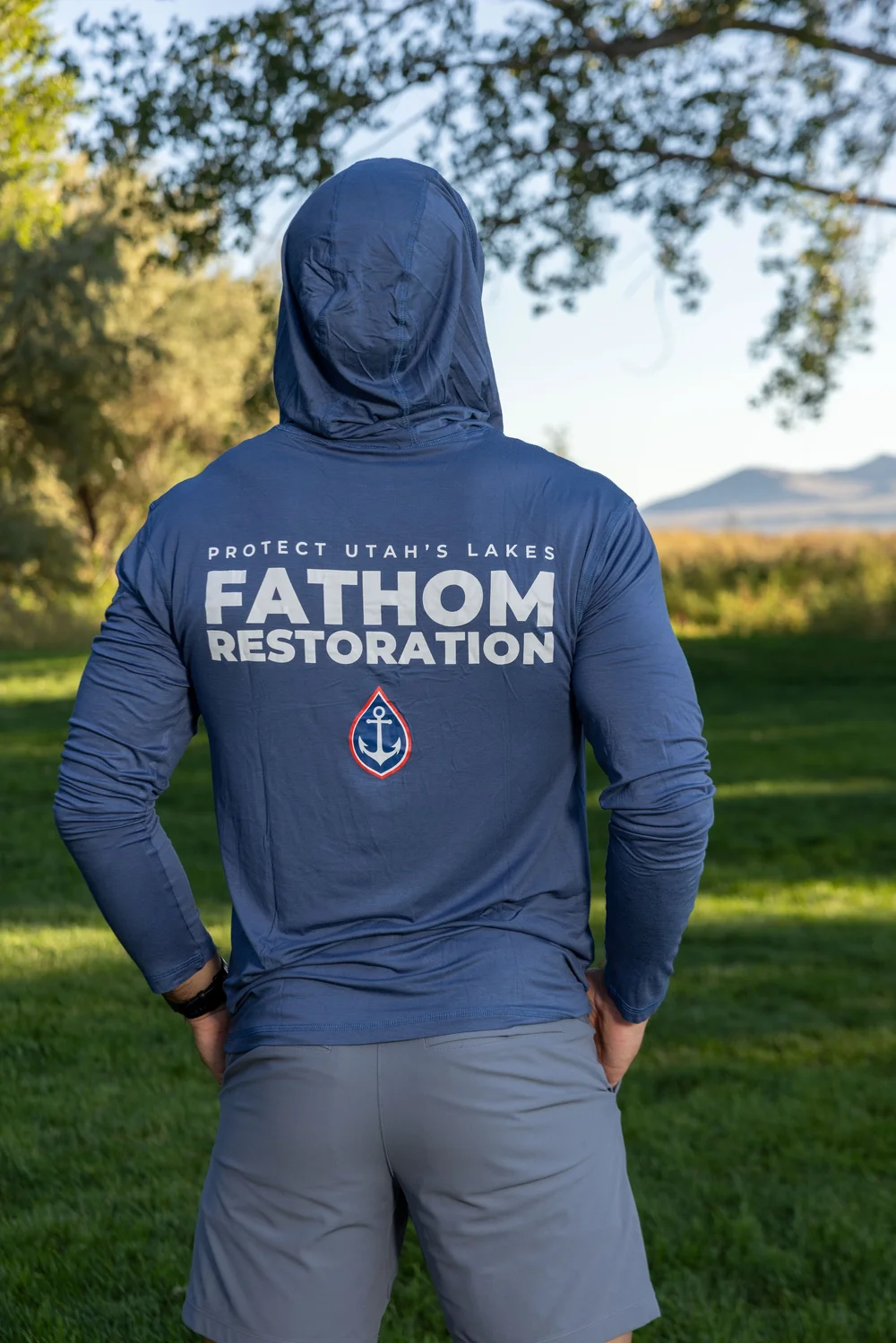
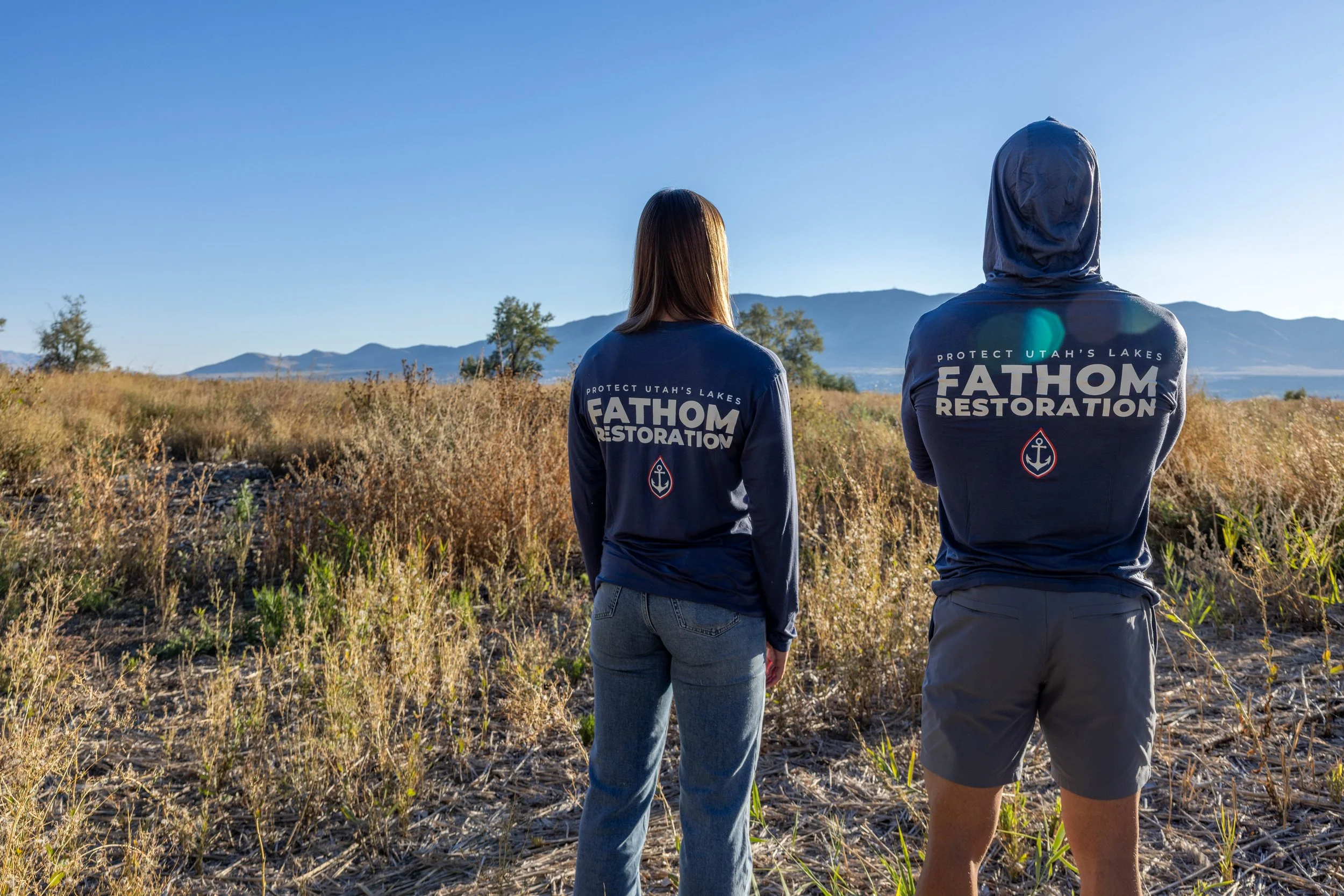
This is the shirt our crew wears on the water.
Not everyone fills out a donation form. Some people would rather wear it. You were going to buy a sun shirt for the lake anyway. Buy this one.
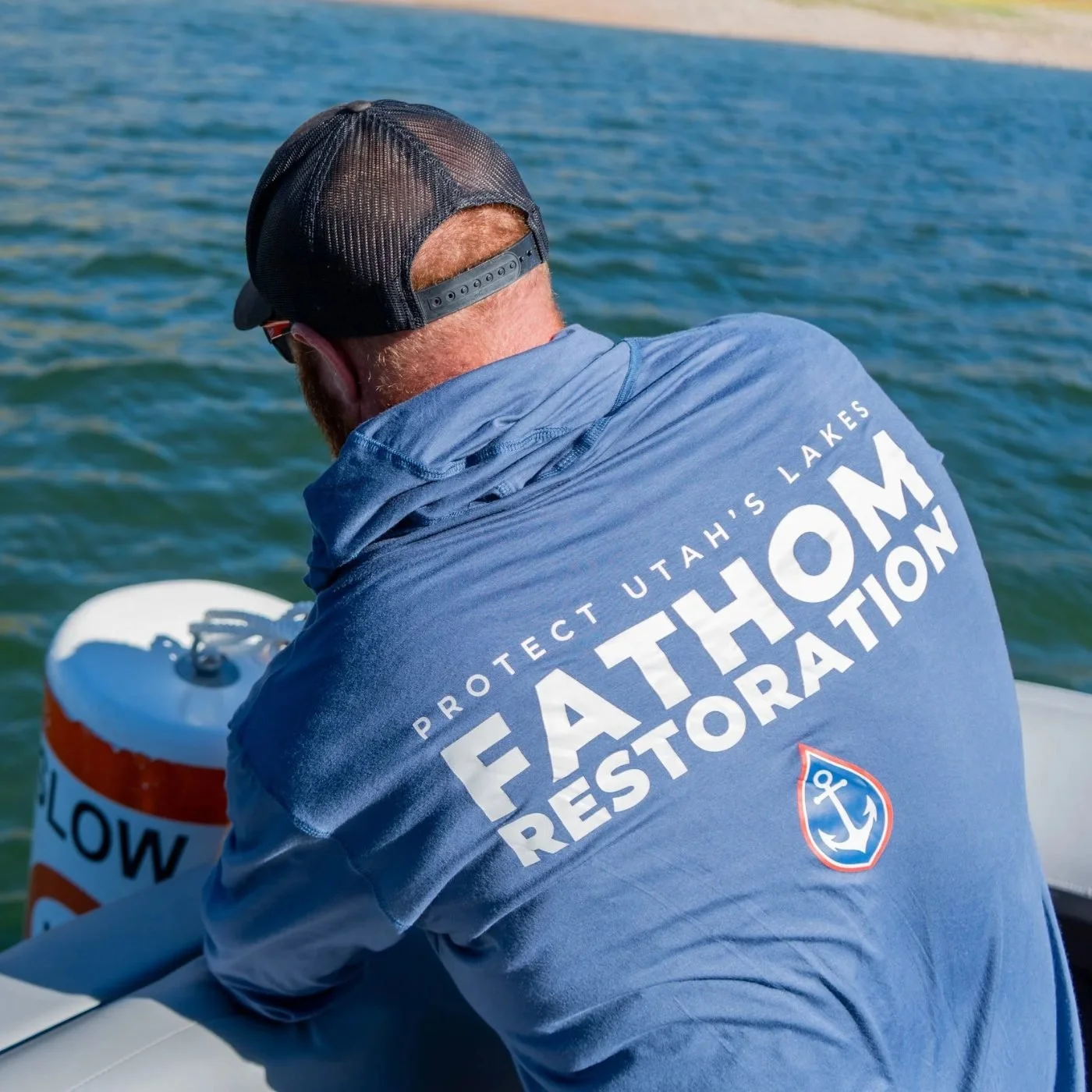
UPF 50. 90 percent viscose from bamboo and 10 percent spandex, ultra soft, dark blue gray. The back reads PROTECT UTAH'S LAKES over the Fathom wordmark and anchor, so you say it on every ramp and trail without a word. A small anchor on the chest. Proceeds fund the mission.
Both styles long sleeve. In stock, ships in 3 to 5 business days. Flat $8 shipping, free over $100. Relaxed fit, order your usual size.


Fair questions
Three questions we hear a lot.
Isn't someone already handling this?
“In addition to being an environmental hazard, abandoned submerged vessels are also a recreation hazard. With Utah Lake's naturally shallow levels, averaging about 10 feet deep when full, abandoned vessels create hidden underwater obstacles and a boating and water safety hazard. We feel it's important that these vessels be removed, for both the environmental benefit and the improvement to boating safety.”
Sam Braegger, Deputy Director, Utah Lake Authority
To our knowledge, we are the only nonprofit in Utah working to start recovering sunken vehicles.
Will a small gift matter?
Every dollar travels far with us.
We run lean, and every dive is logged, photographed and posted, so you can see what your gift did.

Why a shirt?
Our crew wears it on the water. It is the UPF 50 sun shirt you would buy anyway. Proceeds fund the mission.
Protect Utah's lakes
Clean water shouldn't be rare. Help us keep ours.
Utah does not have much fresh water, and what it has carries trash on the bottom. Our volunteer divers carry it out, dive by dive, and are working to start recovering the vehicles and boats that leak into it.
Your gift is tax deductible. Every dive gets logged, photographed and posted. The shirt is in stock, and the crew wears it on the water.
Wear it, or fund it. Either way you are crew.
Check us before you give. Fathom Restoration is an IRS recognized 501(c)(3), EIN 42-2166469. Donations are tax deductible to the fullest extent of the law.
Or start here. It costs nothing.
Read what the crew finds.
The Fathom Dispatch: short field notes from the people who were down there.
